Your First Commander Game: What to Expect
Walking into your first Commander game can feel overwhelming at first.
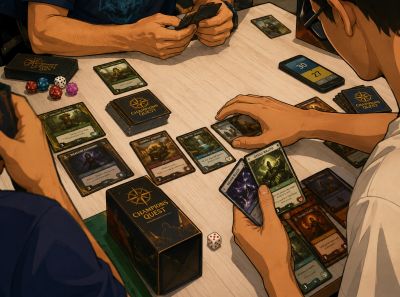
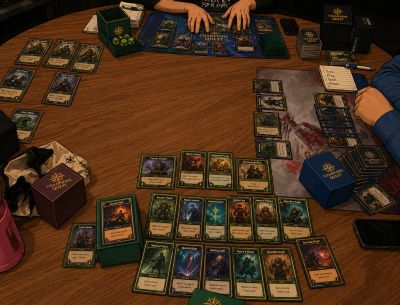
There are four players at the table. Everybody has different cards. Turns seem longer than normal Magic games. People are talking, negotiating, laughing, occasionally panicking—and somehow one player suddenly has twenty Goblins on the battlefield.
If you’re new to EDH (Elder Dragon Highlander, also called Commander), don’t worry—that chaos is completely normal.
The good news is that Commander is also one of the most welcoming and fun ways to play Magic once you understand what’s actually happening during a game.
This guide is here to help you know what to expect before you sit down at your first table.
Discovering the World of DrawTap

What Makes Commander Different?
Commander is different from regular 1v1 Magic in a few important ways:
- Games are usually played with 4 players
- Decks contain 100 cards
- You can only use one copy of each card (except basic lands)
- Every deck is built around a legendary creature called your Commander
- Players start at 40 life instead of 20
Because of this, Commander games feel much more social, unpredictable, and slower paced than standard Magic formats.
And honestly? That’s part of why people love it.
Understanding the Flow of a Commander Game Early Game (Turns 1–4)
The early game is mostly about setting yourself up.
Most players are:
- Playing lands
- Casting mana ramp
- Drawing cards
- Building resources
You usually won’t see massive threats immediately unless somebody has an extremely fast deck.
This is the stage where players are quietly preparing for bigger plays later.
What beginners should focus on:
- Don’t panic if you aren’t attacking immediately
- Prioritize hitting your land drops
- Play your mana rocks and ramp cards early
- Watch what each opponent is building toward
A lot of new players make the mistake of trying to play every strong card in their hand immediately. Commander rewards patience more than speed.
Mid Game (Turns 5–8)
This is where Commander games usually start getting exciting.
Players begin:
- Casting their commanders
- Building large boards
- Using removal spells
- Making alliances
- Starting major strategies
This is the point where you’ll start hearing phrases like:
- “We need to deal with that.”
- “If you don’t attack me, I won’t destroy your creature.”
- “He’s getting too far ahead.”
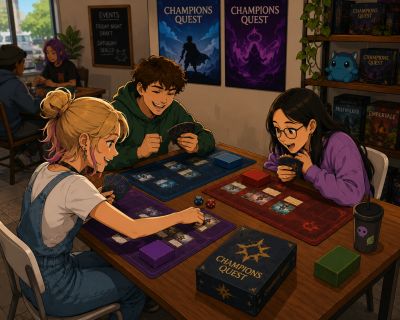
Welcome to Commander politics.
-5316b1c.png/:/rs=w:400,cg:true,m)
Late Game (Turns 9+)
The late game is where things become explosive.
Huge creatures hit the battlefield.
Board wipes reset entire tables.
Somebody suddenly becomes the biggest threat.
Another player quietly assembles a winning combo.
Commander games often end very quickly once one player gains enough momentum.
And yes—sometimes games end in absolutely ridiculous ways.
That’s part of the fun.
Why Do EDH Games Take Longer?
If your first Commander game lasts 90 minutes or more, that’s completely normal.
Commander naturally takes longer because:
There Are More Players
Instead of waiting for one opponent’s turn, you’re waiting for three.
That means:
- More actions
- More interactions
- More decision making
- More combat phases
Players Start at 40 Life
40>20
In regular Magic, aggressive decks can end games quickly because players only have 20 life.
In Commander, everybody starts at 40 life, which means:
- Games are slower
- Players survive longer
- Bigger plays happen later
This gives decks more time to actually “do their thing.”
Commander Is More Social
People talk during Commander games constantly.
And honestly, they should.
Commander is built around:
- Conversations
- Negotiations
- Table reactions
- Alliances
- Threat discussions
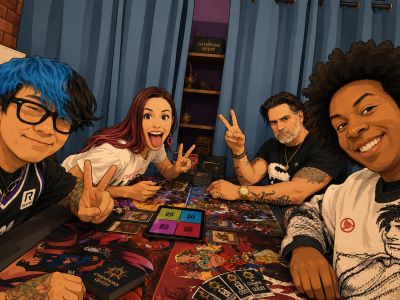
Unlike competitive 1v1 Magic, EDH is often just as much about the people at the table as the cards themselves.
What “Table Politics” Actually Means
Table politics sounds complicated, but it’s really just multiplayer decision making.
In Commander, every action affects multiple people.
That creates situations like:
- Temporary alliances
- Deals between players
- Shared threats
- Negotiated attacks
For example:
“If you destroy his enchantment, I won’t attack you next turn.”
Or:
“Don’t swing at me—I can help stop the combo player.”
Politics is basically the social layer of Commander.
Politics Isn’t About Lying
A common beginner misconception is that politics means tricking people constantly.
Usually, good politics is just:
- Being reasonable
- Understanding the board state
- Convincing others what the biggest threat is
The best Commander players often win because they manage attention well—not because their deck is the strongest.
If nobody sees you as dangerous, you usually survive longer.
Understanding Threat Assessment
Threat assessment means figuring out:
“Who is most likely to win soon?”
This is one of the most important skills in Commander.
And honestly?
It takes practice.
Beginners Often Attack the Wrong Player
New players commonly attack:
- Whoever attacked them first
- Whoever has the most creatures
- Whoever annoyed them
But in Commander, the real threat is usually:
- The player drawing tons of cards
- The player ramping extremely fast
- The player quietly assembling combo pieces
- The player nobody is paying attention to
Sometimes the scariest board isn’t actually the most dangerous player.
So…Who Should You Attack?
A good rule for beginners:
Attack the player who is:
- Pulling ahead in resources
- Building the strongest board
- Closest to winning
- Least likely to be stopped by someone else
Commander isn’t usually about revenge.
It’s about preventing somebody from snowballing out of control.
Don’t Take Attacks Personally
This is a huge lesson for new EDH players.
In Commander:
- Getting attacked does not mean someone dislikes you
- Removing your creature is not personal
- Countering your spell is usually strategic
Most of the time, players are simply trying to manage threats and survive.
The better you get at separating gameplay from emotion, the more fun Commander becomes.
Your First Few Games Will Feel Messy — That’s Normal
Everybody gets overwhelmed during their first Commander games.
There are:
- Hundreds of cards
- Massive board states
- Constant interactions
- Long turns
- Strange combos
Nobody learns EDH overnight.
Even experienced players still discover new interactions constantly.
The important thing is not winning your first game.
The important thing is:
- Learning your deck
- Understanding the flow
- Watching how players make decisions
- Having fun at the table
Because once Commander “clicks,” it becomes one of the most rewarding ways to play Magic.
And trust us…
There’s nothing quite like your first unforgettable EDH game.