Why Krenko, Mob Boss Is One of the Best Budget Commanders

Welcome to Goblin Warfare
If your goal is to build a Commander deck that’s cheap, explosive, and immediately threatening, Krenko, Mob Boss is one of the best places you can start.
This isn’t a slow, grindy value engine.
This is pressure. This is momentum. This is “if you don’t deal with this right now, the game’s over.”
Krenko doesn’t just build a board—he multiplies it.
What Krenko Actually Does (And Why It Gets Out of Hand Fast)
Krenko’s ability is simple on paper:
Tap: Create a number of 1/1 Goblin tokens equal to the number of Goblins you control.
In practice, it snowballs out of control almost immediately.
You start small—maybe two or three goblins.
You activate Krenko once, and now you’ve doubled your board.
Next turn? You double it again.
It doesn’t scale linearly—it scales exponentially. And that’s where new players start to realize just how dangerous “going wide” really is in EDH.
Why Krenko Is Perfect for New Players
There’s no guesswork here. No complicated sequencing puzzles. No need to memorize interactions just to function.
Krenko gives you:
- A crystal-clear game plan — make goblins, then make more goblins
- Immediate feedback — every activation feels impactful
- Simple decision-making — you’re learning positioning and timing, not rules lawyering
This is the kind of deck that teaches you how Commander games actually flow—when to commit to the board, when to hold back, and how quickly you can become the threat.
Built for Budget Players (Without Feeling Weak)
Here’s the part that makes Krenko stand out:
you don’t need expensive cards to make this deck scary.
Most goblins are:
- Cheap to cast
- Easy to find
- Designed to work together
That means you can build a Krenko deck that hits hard without draining your wallet. At casual tables, this deck regularly punches above its price point—and forces opponents to respect it early.
How the Deck Wins (And Wins Fast)
Krenko doesn’t mess around with fancy win conditions. You’re here to overwhelm the table.
The plan is straightforward:
- Develop a small board of goblins
- Land Krenko
- Start tapping him every turn
- Protect him just enough to keep the engine going
- Turn your army sideways—or let your cards do the damage for you
You’ll close games through:
- Sheer combat pressure (20+ goblins adds up fast)
- Damage triggers that punish opponents for your creatures entering or attacking
- Occasional burst turns where your board doubles into lethal out of nowhere
This is one of the fastest ways for a new player to feel like they’re actually controlling the pace of the game.
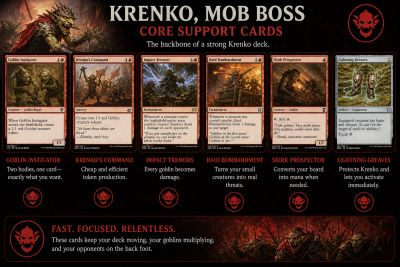
Key Budget Cards That Do Serious Work
- Goblin Instigator — two bodies, one card, exactly what you want
- Krenko’s Command — cheap and efficient token production
- Impact Tremors — every goblin becomes damage
- Raid Bombardment — turns your small creatures into real threats
- Skirk Prospector — converts your board into mana when needed
- Lightning Greaves — protects Krenko and lets you activate immediately
These are the kinds of cards that keep your deck fast, focused, and consistent.
Where Things Can Go Wrong
Krenko is powerful—but he’s not subtle.
Once you start popping off, the table will notice. Fast.
You’ll run into:
- Board wipes that reset your entire army
- Removal aimed directly at Krenko
- Being labeled the immediate threat the moment you get going
And honestly? That’s part of the appeal.
This deck teaches you how to manage attention and timing—two skills that matter in every Commander game.
Final Take
Krenko, Mob Boss is exactly what a beginner Commander deck should be:
- Easy to pick up
- Hard to ignore
- Affordable to build
- Capable of ending games decisively
If you want a deck that teaches you tempo, pressure, and how to actually close out a game, Krenko delivers—every single time.
Why Tatyova, Benthic Druid Is One of the Best Budget Command

Value Without the Headache
If Krenko teaches you how to apply pressure, Tatyova teaches you how to never run out of resources.
This is one of the smoothest Commander decks you can build on a budget. No clunky draws. No awkward turns. Just steady progression that keeps you ahead of the table.
Tatyova doesn’t win by rushing the game—
she wins by making sure you always have more than everyone else.
What Tatyova Actually Does (And Why It’s So Consistent)
Tatyova reads simple:
Whenever a land enters the battlefield under your control, draw a card and gain 1 life.
That’s it. No conditions. No setup hoops.
And that’s exactly why it’s so strong.
You’re already supposed to play lands every turn—Tatyova just turns that into:
- Card draw
- Life gain
- Long-term advantage
Every land drop becomes momentum. And once you start playing extra lands per turn, things get out of hand fast.
Why Tatyova Is Perfect for New Players
A lot of Commander decks ask you to juggle multiple moving parts.
Tatyova simplifies everything down to one core idea:
Play lands → stay ahead.
That teaches you:
- How to sequence turns efficiently
- How to manage your hand
- When to ramp vs when to hold resources
And because you’re constantly drawing cards, mistakes don’t feel punishing—you recover quickly and keep playing.
It’s one of the most forgiving and consistent learning decks in the format.
Built for Budget (But Plays Like It Isn’t)
Simic colors (green/blue) are stacked with:
- Cheap ramp spells
- Efficient card draw
- Strong utility creatures
You don’t need expensive lands or staples to make this deck function. Even with basic ramp packages, Tatyova will carry your engine.
This is one of those decks where:
your commander does the heavy lifting, not your wallet.
How the Deck Wins (The Long Game That Always Pays Off)
Tatyova isn’t trying to end the game on turn 5.
She’s trying to make sure that by turn 8, you’re the only one still playing comfortably.
Your game plan:
- Ramp early (get ahead on lands)
- Land Tatyova
- Start chaining land drops
- Draw into more ramp, more lands, and better threats
- Out-resource the entire table
Win conditions usually look like:
- Dropping large creatures your opponents can’t keep up with
- Building overwhelming board presence
- Grinding out value until opponents run out of answers
You don’t explode—you outlast.

Key Budget Cards That Keep the Engine Running
These are exactly the kind of cards that make Tatyova feel effortless:
- Cultivate / Kodama’s Reach — reliable ramp and consistency
- Growth Spiral — instant-speed ramp + card draw
- Explore — simple and effective acceleration
- Coiling Oracle — early value piece
- Rampaging Baloths — turns land drops into threats
- Evolving Wilds / Terramorphic Expanse — double triggers with Tatyova
Nothing flashy—just pure synergy.
Where the Deck Can Struggle
Tatyova is strong, but not invincible.
You’ll run into issues with:
- Fast aggro decks that pressure you early
- Removal targeting Tatyova before you get value
- Being seen as a long-game threat once your engine starts rolling
But here’s the upside—you’re drawing so many cards that you usually find a way back into the game.
Final Take
Tatyova, Benthic Druid is one of the best beginner commanders because she teaches the core truth of EDH:
The player with the most resources usually wins.
She’s:
- Consistent
- Forgiving
- Budget-friendly
- And incredibly effective
If you want a deck that always feels like it’s working, Tatyova is one of the strongest starting points in the format.
Why Sythis, Harvest’s Hand Is One of the Best Budget Command
Simple Engine. Constant Value.
If Tatyova is about land-based consistency, Sythis is about turning one of the safest card types in Magic into a non-stop value engine.
This deck doesn’t spike. It doesn’t gamble.
It just keeps moving forward every single turn.
And for a beginner? That’s exactly what you want.
What Sythis Actually Does (And Why It Adds Up Fast)
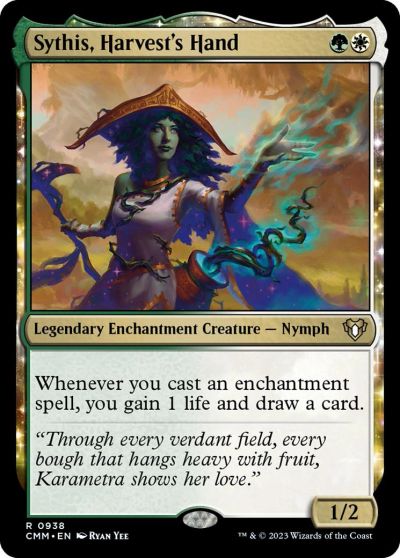
Sythis reads:
Whenever you cast an enchantment spell, you gain 1 life and draw a card.
That’s it. No restrictions. No once-per-turn limit.
So every enchantment becomes:
- A replacement card
- A life buffer
- Progress toward your win condition
You’re not losing resources when you play your deck—you’re cycling through it while building your board.
Why Sythis Is Perfect for New Players
A lot of decks punish mistakes. Sythis doesn’t.
Instead, it rewards you for doing something simple:
Play enchantments consistently.
That teaches you:
- How to build around a theme
- How to maintain card advantage
- How to develop a board without overextending
And because you’re constantly drawing cards, you don’t get stuck top-decking. You stay in the game.
Budget-Friendly by Nature
Enchantments are one of the easiest card types to build on a budget.
You’ll find:
- Cheap auras
- Low-cost ramp enchantments
- Plenty of draw engines
You don’t need high-end staples—Sythis turns average cards into a strong engine just by existing.
How the Deck Wins (Slow Pressure That Becomes Inevitable)
Sythis decks don’t usually win in one explosive turn.
They win by building a board that becomes:
too efficient, too resilient, and too consistent to stop.
Game plan:
- Play Sythis early
- Start casting enchantments every turn
- Build your hand while developing your board
- Control the pace of the game
- Win through combat or overwhelming value
Common win paths:
- Buffing creatures into real threats
- Locking the game with enchantment-based control
- Outlasting opponents until they run out of answers
You don’t rush—you out-resource and outlast.
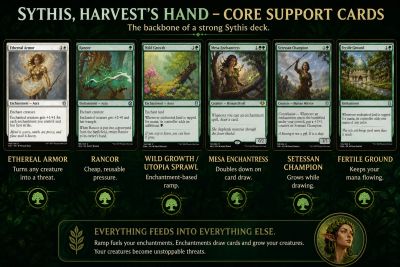
Key Budget Cards That Do the Work
These are the backbone of a strong Sythis deck:
- Ethereal Armor — turns any creature into a threat
- Rancor — cheap, reusable pressure
- Wild Growth / Utopia Sprawl — enchantment-based ramp
- Mesa Enchantress — doubles down on card draw
- Setessan Champion — grows while drawing
- Fertile Ground — keeps your mana flowing
Everything feeds into everything else.
Where the Deck Can Struggle
Sythis is consistent—but not invincible.
You’ll want to watch out for:
- Mass enchantment removal
- Decks that win faster than you can stabilize
- Games where you draw engines but no finishers
Still, because you’re drawing so much, you usually find your way back.
Final Take
Sythis is one of the most beginner-friendly engines in EDH because it does exactly what you want a deck to do:
- Keeps your hand full
- Keeps your board growing
- Keeps you in the game
If you want a deck that feels stable, reliable, and always progressing, Sythis is a perfect choice.
Why Zada, Hedron Grinder Is One of the Best Budget Commander
Small Cards, Massive Turns
Zada is where things start to feel explosive.
This isn’t steady value like Sythis or Tatyova.
This is one turn where everything happens at once.
And the best part? It’s built almost entirely from bulk cards.
What Zada Actually Does (And Why It Gets Wild)
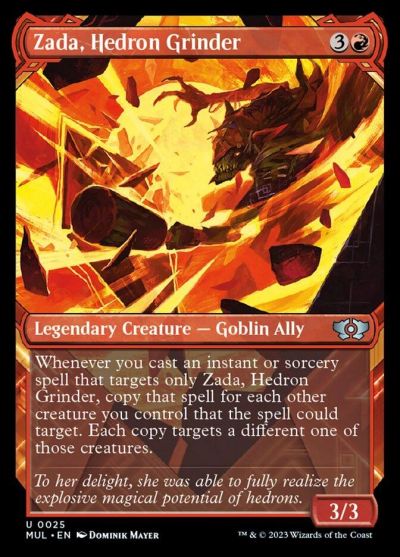
Zada says:
Whenever you cast a spell that targets only Zada, copy it for each other creature you control.
So instead of one spell affecting one creature—
it affects your entire board.
One cheap spell suddenly becomes:
- Card draw across your board
- Power boosts across your board
- A potential game-ending swing
Why Zada Works for Beginners
Zada introduces combo-style thinking without overwhelming you.
You’ll learn:
- Timing and sequencing
- How spells interact
- How to set up a big turn
But the core idea stays simple:
Build a board → cast one spell → everything explodes.
Budget Advantage (This Is Where Zada Shines)
Most Zada decks run:
- 1-mana spells
- Common/uncommon cards
- Minimal expensive pieces
You can build a dangerous Zada deck for almost nothing—and it still feels powerful.
How the Deck Wins (One Turn Changes Everything)
Zada doesn’t grind—she erupts.
Game plan:
- Build a small army of creatures
- Get Zada on the battlefield
- Cast a cheap targeting spell
- Copy it across your entire board
- Chain spells into a massive turn
What that looks like:
- Drawing a huge portion of your deck
- Pumping your creatures to lethal
- Winning in a single combat phase
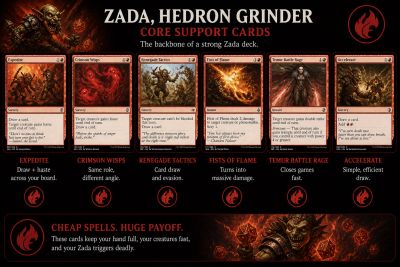
Key Budget Cards That Make It Work
These are essential for getting Zada online:
- Expedite — draw + haste across your board
- Crimson Wisps — same role, different angle
- Renegade Tactics — card draw and evasion
- Fists of Flame — turns into massive damage
- Temur Battle Rage — closes games fast
- Accelerate — simple, efficient draw
Cheap spells. Huge payoff.
Where the Deck Can Fall Apart
Zada is powerful—but fragile.
Watch out for:
- Removal in response to your spell
- Not having enough creatures to copy onto
- Running out of momentum if your turn gets interrupted
This deck rewards good timing more than almost any other on this list.
Final Take
Zada is one of the best budget commanders because it proves something important:
You don’t need expensive cards to have explosive turns.
If you want a deck that teaches you how to set up and execute big plays, Zada delivers in a way few commanders can.
Why Lathril, Blade of the Elves Is One of the Best Budget Co
Classic Tribal Power That Still Holds Up
If you ask long-time Magic players what one of the most reliable strategies is, you’ll hear the same answer over and over:
Elves.
And Lathril, Blade of the Elves brings that strategy into Commander in a way that’s simple to understand, easy to build, and legitimately powerful on a budget.
This is a deck that doesn’t need tricks.
It just needs numbers—and it gets them fast.
What Lathril Actually Does (And Why It Snowballs)
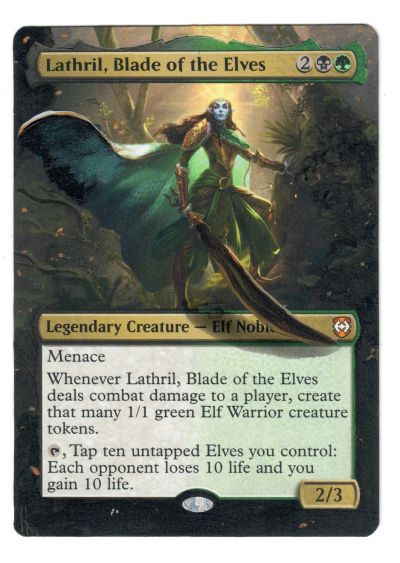
Lathril does two important things:
- When she deals combat damage to a player, you create that many 1/1 Elf tokens
- You can tap 10 Elves to make each opponent lose 10 life while you gain 10
Right away, you’ve got:
- Board growth built into your commander
- A non-combat win condition sitting in the command zone
So even if attacking gets messy, you’ve still got a way to close out the game.
Why Lathril Is Perfect for New Players
Lathril is one of the cleanest examples of how synergy works in Commander.
Everything in your deck is trying to do the same thing:
Make more elves → make those elves better → use them to win
That teaches you:
- How tribal decks function
- How to build momentum over multiple turns
- When to push for damage vs when to build your board
And because so many elf cards naturally support each other, your deck feels cohesive without needing complex interactions.
Built for Budget (And Built to Scale)
Elf tribal is one of the most budget-friendly archetypes in Magic.
You’ll find:
- Cheap mana dorks (creatures that tap for mana)
- Token generators
- Lords (cards that boost your entire team)
And the best part?
You can start cheap and upgrade over time without rebuilding the deck from scratch.
How the Deck Wins (Wide Boards, Big Pressure)
Lathril gives you multiple ways to win—and that flexibility is huge.
Your core game plan:
- Play early elves to ramp your mana
- Get Lathril into combat
- Start generating tokens
- Build a massive board
- Close the game through combat or drain
Your win conditions:
- Swarm the board and attack with overwhelming numbers
- Tap 10 elves and drain the table
- Generate so much mana that you outpace everyone else
This deck doesn’t rely on one path—it adapts.
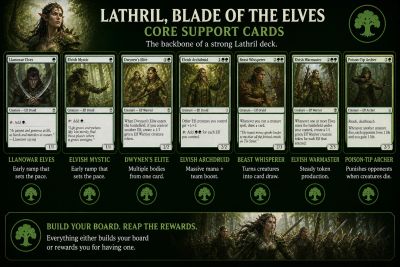
Key Budget Cards That Keep It Running
These are the kinds of cards that make Lathril feel consistent and explosive:
- Llanowar Elves / Elvish Mystic — early ramp that sets the pace
- Dwynen’s Elite — multiple bodies from one card
- Elvish Archdruid — massive mana + team boost
- Beast Whisperer — turns creatures into card draw
- Elvish Warmaster — steady token production
- Poison-Tip Archer — punishes opponents when creatures die
Everything either builds your board or rewards you for having one.
Where the Deck Can Struggle
Lathril is strong—but it’s not subtle.
You’ll run into:
- Board wipes that reset your entire army
- Games where you overextend too early
- Opponents targeting your key pieces once you get going
This deck teaches an important EDH skill:
Don’t commit everything unless you’re ready to win.
Final Take
Lathril, Blade of the Elves is one of the best beginner commanders because it shows you exactly how powerful synergy can be.
It’s:
- Easy to understand
- Fast to develop
- Flexible in how it wins
- And extremely budget-friendly
If you want a deck that feels like it’s building toward something every turn, Lathril delivers in a big way.
Why Feather, the Redeemed Is One of the Best Budget Commande
Small Spells. Endless Value.
Most beginner decks teach you how to play cards.
Feather teaches you how to reuse them.
This is where players start to understand that it’s not just about what your cards do—it’s about how many times you can make them do it.
What Feather Actually Does (And Why It Feels So Efficient)
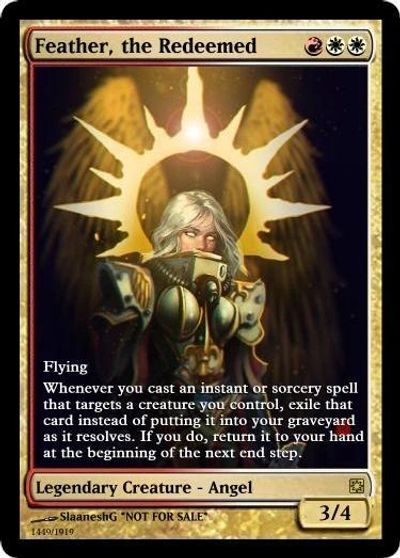
Feather says:
Whenever you cast an instant or sorcery spell that targets a creature you control, exile it instead of putting it into your graveyard. Return it to your hand at the beginning of the next end step.
So instead of your spells being one-and-done…
they come back. Every turn.
That means your cheap spells become:
- Repeatable card draw
- Repeatable protection
- Repeatable damage
You’re not just playing Magic—you’re building a loop.
Why Feather Is Perfect for New Players
Feather introduces a powerful concept without making it complicated:
Efficiency wins games.
You’ll learn:
- How to get maximum value out of cheap cards
- How to time your spells properly
- How to protect your key pieces
And because your spells come back, mistakes don’t cost you as much. You get another shot next turn.
Budget-Friendly by Design
This is where Feather really shines.
Most of the deck is built from:
- 1-mana cantrips (draw a card spells)
- Cheap protection spells
- Low-cost combat tricks
You’re not relying on expensive finishers—you’re relying on repetition and consistency.
How the Deck Wins (Slow Pressure That Builds Fast)
Feather doesn’t usually win in one big explosion.
She wins by turning small advantages into something overwhelming.
Game plan:
- Get Feather onto the battlefield
- Start casting cheap spells that target your creatures
- Reuse those spells every turn
- Build incremental advantage
- Push through damage with boosted creatures
What that looks like in-game:
- Drawing extra cards every turn
- Keeping your creatures protected constantly
- Turning small attacks into meaningful damage
Over time, your opponents fall behind while you stay efficient.
Key Budget Cards That Keep the Engine Running
These are the kinds of cards that make Feather feel unstoppable:
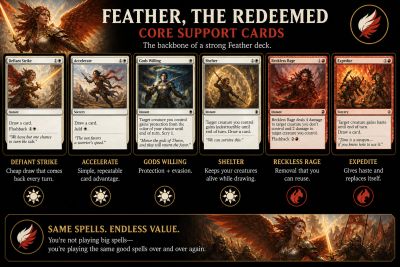
- Defiant Strike — cheap draw that comes back every turn
- Accelerate — simple, repeatable card advantage
- Gods Willing — protection + evasion
- Shelter — keeps your creatures alive while drawing
- Reckless Rage — removal that you can reuse
- Expedite — gives haste and replaces itself
You’re not playing big spells—you’re playing the same good spells over and over again.
Where the Deck Can Struggle
Feather is efficient—but she’s also dependent.
Watch out for:
- Removal targeting Feather before you untap
- Not having enough creatures to support your spells
- Running out of momentum if Feather gets shut down repeatedly
This deck teaches another key lesson:
Protect your engine, or your deck slows down fast.
Final Take
Feather, the Redeemed is one of the best beginner commanders because it shifts your mindset from:
“What does this card do?”
to
“How much value can I get from this card?”
It’s:
- Cheap to build
- Easy to understand
- Deep enough to grow with you
- And incredibly rewarding when played well
If you want to learn how to play smarter, not just bigger, Feather is one of the best places to start
Why Yarok, the Desecrated Is One of the Best Budget Commande
Double the Value, No Extra Work
Some commanders ask you to jump through hoops.
Yarok doesn’t.
Yarok takes what your deck is already doing—and simply says:
“Do it twice.”
That’s what makes this one so satisfying, especially for newer players. You’re not learning complicated mechanics—you’re just getting more out of everything.
What Yarok Actually Does (And Why It Gets Out of Control)
Yarok says:
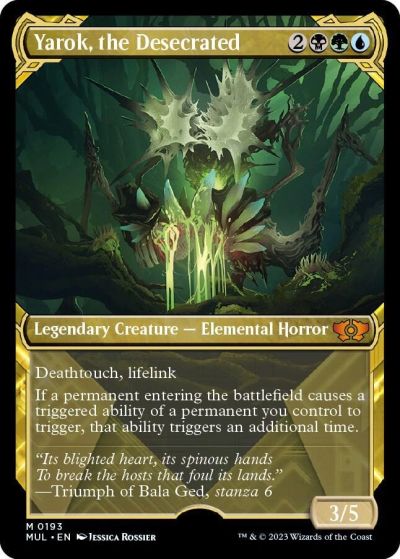
If a permanent entering the battlefield causes a triggered ability to trigger, that ability triggers an additional time.
In simple terms:
- Your creatures enter → their abilities happen twice
- Your lands trigger effects → they trigger twice
- Your value pieces → double value
Play one card, get two effects. Every time.
Why Yarok Is Perfect for New Players
Yarok teaches one of the most important EDH concepts:
Value stacks—and it wins games.
You don’t need to learn combos right away. You just need to:
- Play creatures
- Trigger abilities
- Watch your board do more than everyone else’s
It’s easy to understand, but powerful enough to feel impactful right away.
Budget-Friendly Value Engine
The best part about Yarok?
The cards that work with it are everywhere.
You’re looking for:
- Creatures with enter-the-battlefield (ETB) effects
- Ramp creatures
- Removal on a body
Most of these are:
- Cheap
- Flexible
- Already staples in casual Commander
Yarok just makes them better.
How the Deck Wins (Out-Value the Table)
Yarok doesn’t rush the game—it takes control of it.
Your game plan:
- Ramp early
- Play value creatures
- Land Yarok
- Start doubling every effect
- Out-resource everyone at the table
What that turns into:
- Drawing more cards than anyone else
- Removing more threats than anyone else
- Developing a stronger board every turn
Eventually, your advantage becomes overwhelming—and the game tilts in your favor.
Key Budget Cards That Do Serious Work
These are the kinds of cards that make Yarok feel unfair (in a good way):
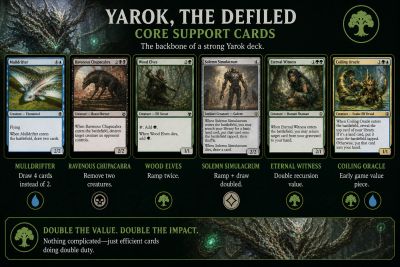
- Mulldrifter — draw 4 cards instead of 2
- Ravenous Chupacabra — remove two creatures
- Wood Elves — ramp twice
- Solemn Simulacrum — ramp + draw doubled
- Eternal Witness — double recursion value
- Coiling Oracle — early game value piece
Nothing complicated—just efficient cards doing double duty.
Where the Deck Can Struggle
Yarok is powerful—but it comes with a few trade-offs:
- Higher mana cost means a slower start
- You can become the biggest threat quickly
- If Yarok gets removed, your deck slows back down to normal speed
This deck teaches patience:
You don’t need to rush—you need to time your impact.
Final Take
Yarok, the Desecrated is one of the best beginner commanders because it makes the game feel rewarding immediately.
You play a card… and it feels like you played two.
It’s:
- Easy to understand
- Highly interactive
- Flexible in how it wins
- And very strong on a budget
If you want a deck that teaches you how to generate value and control the game without complicated combos, Yarok is a perfect step forward.
Why Giada, Font of Hope Is One of the Best Budget Commanders
Big Creatures, Simple Game Plan
Some decks win through synergy. Some win through combos.
Giada wins by doing something much simpler:
playing bigger, better creatures faster than everyone else.
If you want a Commander deck that feels powerful without being complicated, Giada is one of the cleanest options you can build.
What Giada Actually Does (And Why It Matters)
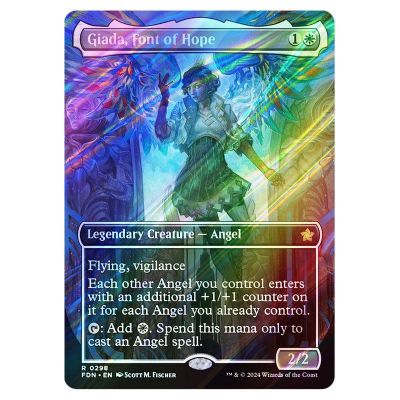
Giada gives you two major advantages:
- She taps for white mana to cast Angel spells
- Each Angel you play enters the battlefield with additional +1/+1 counters
So right away, you’re doing two things better than normal:
- Casting your big threats earlier
- Making those threats stronger immediately
You’re not just playing Angels—you’re accelerating them and scaling them at the same time.
Why Giada Is Perfect for New Players
Giada strips Commander down to a very straightforward concept:
Play strong creatures → attack → win.
That teaches you:
- Combat fundamentals
- Threat evaluation
- Board presence and pressure
There’s no complicated engine to manage. Your power is right there on the battlefield.
Budget-Friendly (With Room to Grow)
Angels look expensive—but many solid options are actually very affordable.
You can build a strong Giada deck with:
- Mid-range cost creatures
- Cheap support pieces
- Basic mono-white mana base
And if you want to upgrade later? Angels scale extremely well with investment.
How the Deck Wins (Air Superiority)
Giada decks win by controlling the skies.
Your game plan:
- Play Giada early
- Use her to ramp into Angels
- Build a board of flying threats
- Scale those threats with counters
- Attack consistently and close the game
Why it works:
- Most Angels have flying, making them hard to block
- Your creatures naturally grow larger than your opponents’
- You apply steady, unavoidable pressure
You’re not sneaking wins—you’re taking over the battlefield.
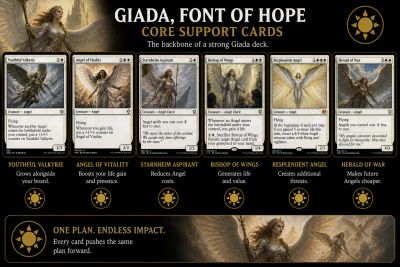
Key Budget Cards That Strengthen the Strategy
These are the kinds of cards that make Giada feel smooth and effective:
- Youthful Valkyrie — grows alongside your board
- Angel of Vitality — boosts your life gain and presence
- Starnheim Aspirant — reduces Angel costs
- Bishop of Wings — generates life and value
- Resplendent Angel — creates additional threats
- Herald of War — makes future Angels cheaper
Every card pushes the same plan forward.
Where the Deck Can Struggle
Giada is straightforward—but that comes with trade-offs:
- Board wipes can set you back significantly
- Mono-white can struggle with card draw
- Your strategy is visible—opponents know what you’re doing
That said, this deck teaches an important lesson:
Sometimes consistency beats complexity.
Final Take
Giada, Font of Hope is one of the best beginner commanders because it focuses on the fundamentals:
- Play strong creatures
- Build your board
- Apply pressure
- Win through combat
It’s:
- Easy to learn
- Satisfying to play
- Budget-friendly
- And scalable as you improve
If you want a deck that feels powerful without needing complicated interactions, Giada delivers exactly that.
Why Aesi, Tyrant of Gyre Strait Is One of the Best Budget Co
Bigger Turns. Bigger Advantage.
If Tatyova is about smooth consistency, Aesi is about turning that consistency into overwhelming power.
This is the kind of deck where your turns start feeling bigger than everyone else’s. More lands, more cards, more options—every single rotation.
What Aesi Actually Does (And Why It Takes Over Games)
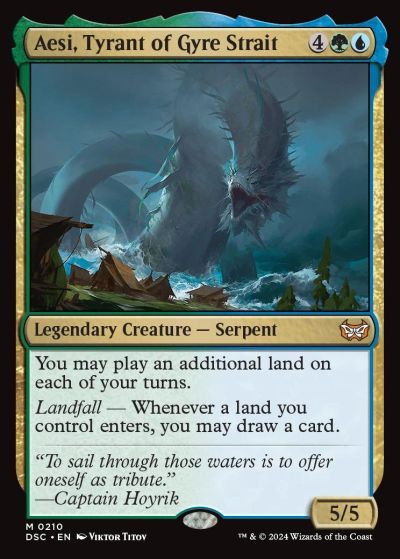
Aesi gives you two massive advantages:
- You can play an additional land on each of your turns
- Whenever a land enters the battlefield under your control, draw a card
So now, instead of playing one land and moving on—you’re:
- Playing multiple lands
- Drawing multiple cards
- Scaling your resources faster than the table
This isn’t just value—it’s acceleration.
Why Aesi Is Perfect for New Players
Aesi reinforces one of the most important Commander fundamentals:
If you have more resources, you control the game.
You’ll learn:
- How to ramp efficiently
- How to sequence your turns for maximum value
- How to transition from setup into domination
And because you’re constantly drawing cards, your deck feels consistent even if you make mistakes early.
Budget-Friendly Ramp Machine
The core of an Aesi deck is built from:
- Ramp spells
- Land-based effects
- Card draw tied to lands
These are some of the most accessible cards in Magic.
You don’t need expensive lands or premium staples—just volume and synergy.
How the Deck Wins (Outscale Everyone)
Aesi doesn’t win quickly—it wins inevitably.
Your game plan:
- Ramp early and often
- Get Aesi onto the battlefield
- Start chaining land drops
- Draw into more ramp and bigger threats
- Overwhelm the table with sheer advantage
What that looks like:
- Playing multiple lands per turn
- Drawing 2–4 extra cards consistently
- Dropping threats your opponents can’t keep up with
At a certain point, you’re just operating on a different level.
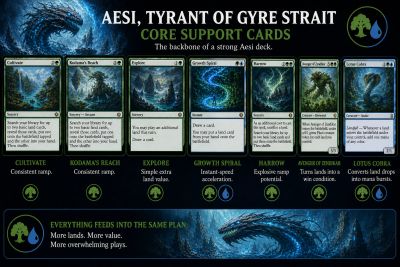
Key Budget Cards That Fuel the Engine
These are exactly the kinds of cards that make Aesi feel unstoppable:
- Cultivate / Kodama’s Reach — consistent ramp
- Explore — simple extra land value
- Growth Spiral — instant-speed acceleration
- Harrow — explosive ramp potential
- Avenger of Zendikar — turns lands into a win condition
- Lotus Cobra — converts land drops into mana bursts
Everything feeds into the same plan: more lands, more value.
Where the Deck Can Struggle
Aesi is powerful—but it’s not without weaknesses:
- Higher mana cost means you need setup time
- You become a target quickly once you start drawing cards
- Early aggression can pressure you before your engine starts
Still, once you stabilize, it’s hard for opponents to catch back up
Final Take
Aesi, Tyrant of Gyre Strait is one of the best beginner commanders because it shows you what Commander looks like when everything is working.
It’s:
- Consistent
- Powerful
- Resource-heavy
- And incredibly satisfying to play
If you want a deck that lets you scale into dominance instead of racing to win, Aesi is a perfect choice.
Why Bruvac Is One of the Best Budget Commanders
Winning Without Combat
Most Commander decks win by attacking.
Bruvac doesn’t care about combat at all.
This is a completely different angle on the game—and for new players, it’s a great way to understand that there’s more than one way to win in EDH.
What Bruvac Actually Does (And Why It’s So Dangerous)
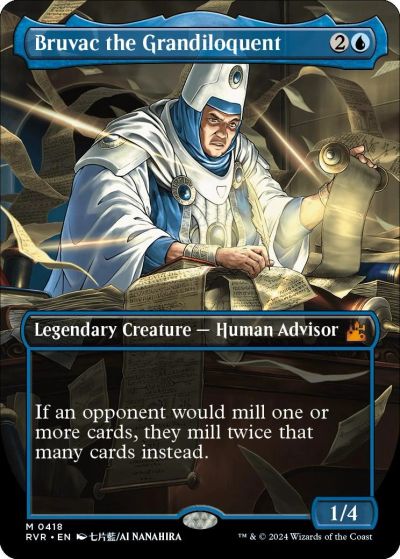
Bruvac says:
If an opponent would mill one or more cards, they mill twice that many instead.
That means every mill effect you play is instantly doubled.
- Mill 5 → becomes 10
- Mill 10 → becomes 20
- Big spells? They end games fast
What would normally take multiple turns suddenly becomes a real threat.
Why Bruvac Is Great for Beginners
Bruvac introduces a clear, focused strategy:
Reduce your opponents’ libraries to zero.
You’ll learn:
- How alternate win conditions work
- How to target opponents effectively
- How to manage threat perception at the table
And because your goal is so straightforward, your decisions stay simple.
Budget-Friendly Strategy
Mill is one of the most accessible archetypes in Magic.
You’ll find:
- Cheap mill spells
- Efficient enablers
- Plenty of redundancy
You don’t need expensive finishers—Bruvac turns average cards into serious threats.
How the Deck Wins (Fast Library Pressure)
Bruvac decks don’t grind—they apply pressure quickly.
Your game plan:
- Play Bruvac
- Start casting mill spells
- Double every effect
- Focus down opponents one at a time
- Empty libraries before they can stabilize
What that looks like:
- Huge chunks of decks disappearing
- Opponents scrambling to respond
- Games ending without combat ever mattering
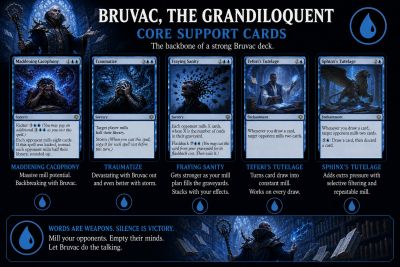
Key Budget Cards That Close Games
These are the kinds of cards that make Bruvac feel lethal:
- Maddening Cacophony — massive mill potential
- Traumatize — devastating with Bruvac out
- Fraying Sanity — stacks with your effects
- Teferi’s Tutelage — turns card draw into constant mill
- Sphinx’s Tutelage — adds extra pressure with filtering
With Bruvac, these cards don’t just help—they end games.
Where the Deck Can Struggle
Bruvac is focused—but that focus comes with trade-offs:
- You’ll draw table attention quickly
- Graveyard decks can benefit from being milled
- You have limited board presence compared to creature decks
This deck teaches awareness:
Know when to go all-in—and when to hold back.
Final Take
Bruvac the Grandiloquent is one of the best beginner commanders because it shows a completely different side of Commander.
It’s:
- Easy to understand
- Focused in its goal
- Budget-friendly
- And capable of ending games quickly
If you want a deck that proves you don’t need combat to win, Bruvac is a powerful place to start.